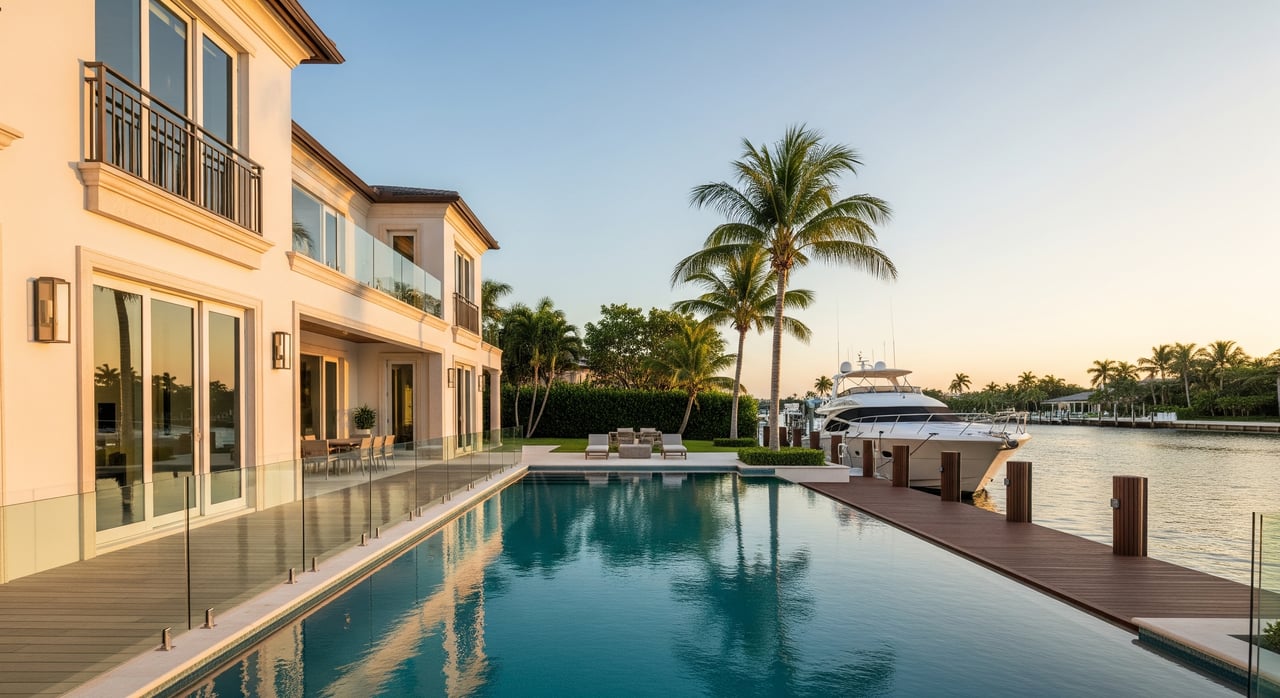
Pricing a Bay Colony home by dollars per square foot seems simple, but it can miss the real story. If you are buying or selling on the water, details like dock depth, seawall condition, flood rules, and rebuild potential often outweigh raw interior size. You deserve a clear way to evaluate value that reflects how high-end waterfront buyers actually shop. This guide shows you what matters beyond price per foot and how to use it to your advantage. Let’s dive in.
Why $/sq ft falls short in Bay Colony
Price per foot averages everything, but Bay Colony values turn on site-specific features that comps often gloss over. Waterfront frontage, usable dockage, and direct access to open water can eclipse interior finishes in the final price. Permits, elevation, and flood compliance also shape what a home is worth today and what it could be worth after upgrades. In a premium enclave with limited inventory, these differences are decisive.
Waterfront frontage and dockage carry weight
Linear waterfront vs usable dock length
Buyers and appraisers look closely at linear waterfront footage because each foot is scarce in Bay Colony. That said, you cannot multiply frontage by a number and call it a day. What counts is how much of that frontage is usable dock space and how it functions for the type of vessel you own or plan to own. A long, well-designed dock setup will usually outperform a shorter or obstructed one even if the homes are similar in size.
Depth, access, and dock utilities
Water depth at mean low water determines what size and type of boat can be berthed. Deep water and quick, unobstructed access to open water attract yacht owners and command premiums. Dock features matter too. Buyers value quality piles, fixed or floating docks, finger piers, reliable electrical service, and lift capacity that matches their vessel. For practical guidance on dock and lift considerations, review the boating resources from BoatUS.
Seawall condition and permitting
A strong, permitted seawall is a major asset, while a failing one can transfer six-figure risk and timeline uncertainty to a buyer. Many marine improvements require county or state permits. You can confirm local dock and seawall rules through Broward County Planning and Building resources and statewide permitting guidance from the Florida Department of Environmental Protection. If work was done without proper permits, expect negotiations, remediation, or appraisal adjustments.
Renovation quality and proof drive confidence
Quality is more than fresh paint. Coastal buyers look for structural and mechanical upgrades like impact windows and doors, newer roofs, hurricane-rated garage doors, modern electrical and plumbing, and corrosion-resistant HVAC. When you can document these with permits, finals, and warranties, you reduce perceived risk and often justify pricing above generic comps. You can check permit history and requirements through the Broward County Building Division, and review buyer preference trends in market coverage from Florida Realtors.
Style also matters, but authenticity and execution beat trends. A well-done contemporary or a thoughtfully updated period home often commands more than a rushed flip with thin finishes.
Orientation, views, privacy, and design
Orientation influences daily living. Eastern or water-focused orientations can offer better views and more usable outdoor spaces with balanced sun exposure. Wide-water sightlines, thoughtfully placed pools and outdoor rooms, and privacy from neighboring docks can make one home far more desirable than another with the same interior square footage. Proximity to channels and bridges can be a plus for access or a consideration for noise, depending on your lifestyle.
Rebuild potential, zoning, and flood rules
For many buyers and investors, the ability to expand or build new is a core part of value. Zoning, lot coverage, floor area ratio, setbacks, and height limits determine what is feasible on a specific lot. You can review rules and processes through the City of Fort Lauderdale building and zoning pages and Broward County resources.
Flood zones and elevation are equally important. Your FEMA flood zone and base flood elevation shape minimum finished-floor requirements and floodproofing strategies. The “substantial improvement” rule can require full code compliance once renovation costs exceed a percentage of the structure’s value, which can transform timelines and budgets. You can check your property’s flood zone through the FEMA Flood Map Service Center and learn more about the substantial improvement framework in FEMA guidance available at FEMA.gov. For a forward look at coastal exposure, the NOAA Sea Level Rise Viewer can help you visualize potential scenarios.
Insurance and carrying costs
Flood and windstorm insurance availability and pricing affect buyer demand and long-term holding costs. Elevation certificates, mitigation features like impact openings, and compliance with current codes can improve your insurance profile. Before you set an asking price or make an aggressive offer, confirm insurability and premiums based on the specific property data.
Strategy for sellers in Bay Colony
Presenting a complete, verified story helps buyers and appraisers see value beyond $/sq ft.
- Assemble a document packet: permits and final inspections, contractor warranties, past elevation certificates, and marine reports.
- Verify waterfront details: a current survey noting linear waterfront footage, dock length, and depth at mean low water.
- Commission a marine evaluation: seawall condition, pile type, lift specs, and electrical service at the dock.
- Highlight high-impact upgrades: impact glazing, newer roof, generator readiness, corrosion-resistant HVAC, and permitted renovations.
- Disclose flood zone, insurance history, and any claims to reduce uncertainty.
- Consider a pre-listing inspection for roof, HVAC, electrical, and plumbing to support premium pricing.
Strategy for buyers in Bay Colony
Buy with a plan that aligns the site with your lifestyle and risk profile.
- Confirm linear waterfront footage and the type of waterway, then match it to vessel size and draft requirements.
- Order a marine and dock inspection, including depth soundings at low tide and a seawall assessment.
- Review permit history for all renovations and marine work, and verify finals.
- Obtain an elevation certificate and verify the FEMA flood zone through the FEMA Flood Map Service Center.
- Get insurance quotes for flood and wind before finalizing your offer terms.
- Check zoning and any covenants, then consult with an architect on potential rebuild envelope and costs.
- Use historic parcel data and sales records from the Broward County Property Appraiser for context.
How to price and negotiate with confidence
Appraisers and seasoned agents regularly make adjustments for waterfront versus interior lots, view quality, dockage, seawall condition, permitted improvements, and functional layout. If you are selling, make these adjustments easy by delivering verified documentation up front. If you are buying, include contingencies for dock and seawall inspections, permit verification, and insurance review so your offer reflects the true cost of ownership.
The advantage of a concierge advisor
You deserve representation that treats your asset like the rarity it is. With a full-service team, strong vendor networks, and cross-border reach for international and Canadian buyers, you can market or acquire Bay Colony property with confidence. From permit research and marine evaluations to lifestyle marketing that speaks to the right audience, you get a curated approach that moves beyond price per foot to real value. If you are exploring a purchase or preparing to list, request a private consultation with Brady Thrasher.
FAQs
How is linear waterfront measured in Bay Colony?
- A licensed surveyor typically measures linear waterfront footage along the waterline. Ask for a recent survey that notes frontage and any encroachments so buyers and appraisers can verify.
How do I confirm water depth and boat size fit at a Bay Colony dock?
- Order a marine inspection with depth soundings at mean low water and review lift capacity and power at the dock. Match those findings to your vessel’s length, beam, and draft.
What should I know about seawall permitting in Broward County?
- Many seawall and dock projects require county or state permits. Verify approvals and finals through Broward County Planning and Building resources and the Florida Department of Environmental Protection.
How do flood zones affect Bay Colony renovations?
- Your FEMA zone and base flood elevation can set minimum finished-floor heights and floodproofing. Renovations that meet the “substantial improvement” threshold may trigger full compliance. Check the FEMA Flood Map Service Center and FEMA guidance at FEMA.gov.
What zoning factors determine rebuild potential in Fort Lauderdale?
- Lot coverage, setbacks, floor area ratio, height, and any neighborhood covenants shape what you can build. Review local rules through the City of Fort Lauderdale building and zoning pages and consult your design team.
Which documents help justify a premium asking price on a Bay Colony listing?
- Provide permit history and finals, contractor warranties, elevation certificates, a recent survey with waterfront footage, and a marine report covering seawall, dock, lift specs, and water depth.
Where can I find verified parcel and sale history for a Bay Colony property?
- Use the Broward County Property Appraiser to review parcel attributes, historic sales, and recorded data that support due diligence.