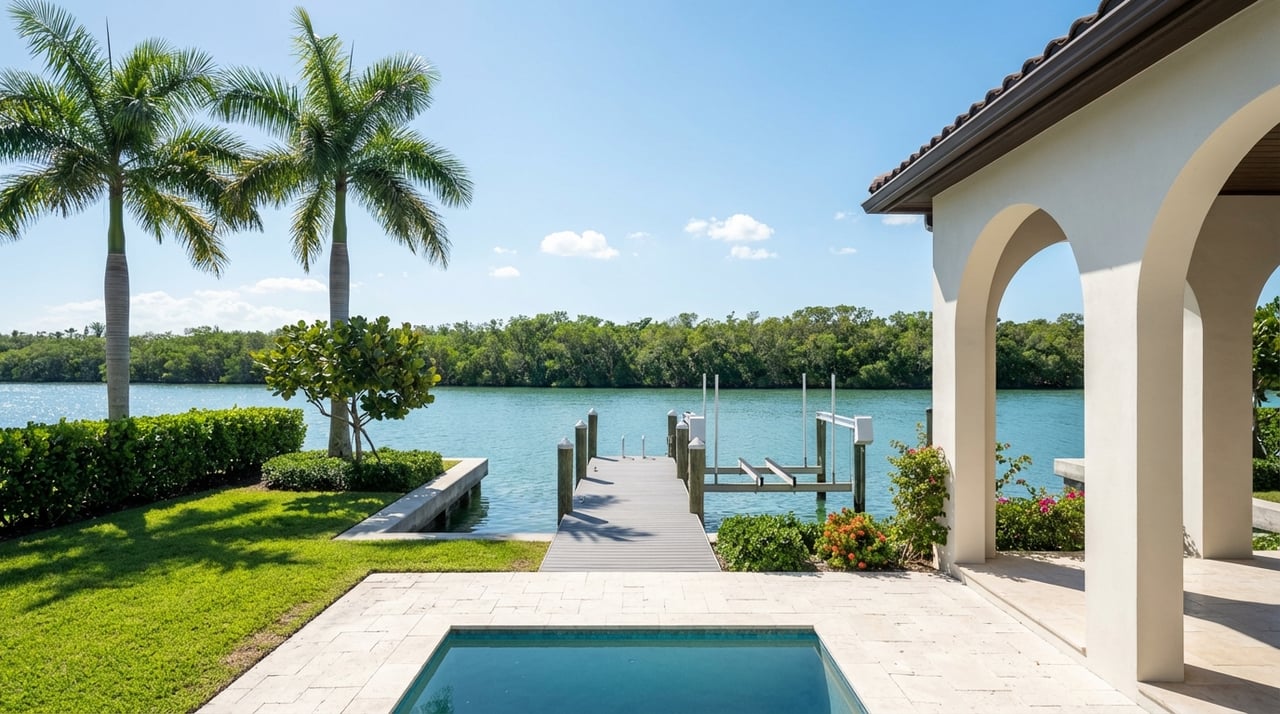
Thinking about selling your Bay Colony waterfront estate but not sure where to start? You are not alone. In a gated, yacht‑friendly community like Bay Colony, the right plan can add real value and reduce stress. In this guide, you’ll learn how premium buyers think, how to price with confidence, which documents to prepare, and the marketing moves that attract qualified, discreet prospects. Let’s dive in.
Why Bay Colony sells differently
Bay Colony is an intimate, guard‑gated enclave in northeast Fort Lauderdale known for deepwater canals, private docks and quick ocean access with many routes offering no fixed bridges. The combination of privacy, security and boating convenience sets it apart from broader Broward trends. Waterfront here is not interchangeable, and neither are buyer expectations.
The neighborhood also draws attention from high‑profile and international buyers. Coverage of a notable off‑market purchase put a national spotlight on the area, illustrating Bay Colony’s appeal to private, well‑qualified buyer pools. While headlines do not determine pricing, they do expand awareness among serious prospects. You can see that interest reflected in reporting on a high‑profile purchase that boosted neighborhood visibility in Fort Lauderdale, as noted by a national real estate outlet. (Mansion Global coverage)
What premium buyers look for
High‑net‑worth and yacht‑capable buyers focus on four essentials. Position your estate on these points and you will speak their language.
Dockage and marine infrastructure
For yacht owners, the dock is as important as the kitchen. Buyers ask for:
- Usable dock length, measured and documented at the property line.
- Low‑tide depth at the dock, referenced to a recognized datum (MLW/MLLW).
- Turning‑basin width and the route to the Intracoastal, including any recent dredging.
- Lift presence and capacity, plus shore power amperage at the dock.
- Dock construction type and seawall condition with engineer notes.
A short marine brief with measurements, depths and permits builds confidence. If upgrades are needed, factor permitting into your timeline because marine work often requires layered reviews. A permitting specialist can help you navigate state and federal steps efficiently. Learn more about how multi‑agency marine permitting can affect timelines from a local permitting resource. (Permitting overview)
For buyers new to Fort Lauderdale boating, a clear explanation of deepwater access and bridge clearance is essential. Concise dock diagrams, depth annotations and route notes can make your estate stand out to serious yachting prospects. A local deepwater guide outlines what experienced buyers tend to check first, from lift capacity to turning radii. (Deepwater buyer checks)
Lot position and orientation
Not all waterfront footage is equal. Point lots, wide frontages and southern or easterly exposures are often prized for sun, views and flexible dock layouts. Lots with wide turning basins or space for multiple side slips help owners of larger yachts maneuver and berth with ease. Use measured waterfront footage and exposure in your marketing materials so buyers can assess fit at a glance.
Renovation level and systems
Turnkey estates reach the widest pool. Buyers respond to updated roofs and HVAC, impact protection or documented hurricane systems, modern electrical service that can support EVs and generators, engineered seawall and dock reports, and a clean permit history. If a home is sold “as‑is,” set expectations early with inspection summaries and system ages. Transparency speeds decisions and preserves leverage.
Privacy, security and discretion
Bay Colony’s 24/7 manned entry and limited access enhance privacy. High‑net‑worth and international buyers often request secure, private showings and may prefer off‑market previews before a public debut. Align your plan with that reality by coordinating vetted broker appointments and controlled media releases.
Price your estate with real context
Waterfront pricing is part science, part nuance. Many sellers start with price per linear foot of waterfront, but that metric needs heavy adjustment for lot type, exposure, dock capacity, seawall condition and the home’s renovation level.
- Recent Bay Colony examples show a wide spread, with ratios ranging from the mid‑$20,000s to nearly $50,000 per waterfront foot. This variation underscores why you should not rely on a single per‑foot benchmark.
- Replace generic comparables with like‑for‑like analysis: point vs interior lots, actual turning basin, measured dock length, lift compatibility for target yacht sizes, and recency and quality of renovations.
- County‑level data can be interesting background, but the luxury deepwater niche performs differently from the median. Treat broad stats as context, not a compass.
The takeaway: use per‑foot as a starting input, then layer in boating function, lot position and build quality. Precision in these adjustments reduces time on market and helps defend value during negotiations.
A 12–24 month plan that works
If you are 12 to 24 months from listing, a staged plan helps you control costs, manage permits and go to market at your best.
Months 0–3: Diagnose and document
- Order a pre‑listing inspection package: roof, structural, pest and mold screens, plus a pool and HVAC review.
- Commission a marine survey for dock measurements and documented low‑tide depths.
- Obtain a seawall engineering inspection, as‑builts, and permit history.
- Pull a current boundary survey and Elevation Certificate. Flood information and insurability matter to many buyers, and loan‑backed buyers will ask for it. The City provides helpful guidance on flood zones and insurance. (City flood resources)
- Request HOA/POA documents, assessment status and an estoppel so you can answer buyer questions quickly.
Months 3–9: Permit and improve
- If the seawall or dock needs work, engage a marine contractor and a permitting specialist early. Reviews can include state and federal steps and often take months. Plan for boat access continuity while work proceeds. A permitting overview explains why sequencing matters and what to expect. (Marine permitting insights)
- Complete high‑ROI upgrades that drive buyer willingness to pay: impact windows and doors, kitchen and primary bath updates, electrical service improvements, pool equipment and smart home basics. Defer lower‑ROI cosmetics until your photography and staging plan is set.
Months 9–12: Prepare and produce
- Create premium marketing assets: twilight drone photography, a boat‑based approach video, floor plans, a 3D tour and a single‑property site.
- Build a precise data room: permits, as‑builts, surveys, elevation certificate, inspection reports and service histories. A polished disclosure packet signals quality and helps avoid delays.
Listing window: Go to market with intention
- Use a two‑track launch: MLS plus targeted luxury networks, paired with discreet outreach to vetted brokers, private wealth managers and yacht channels.
- Schedule secure private showings and plan one twilight or marine showing for yachting buyers. Check tide timing to demonstrate approach and maneuvering.
Marketing that reaches real buyers
Your prime audience includes yacht‑focused families, U.S. high‑net‑worth movers and international buyers. South Florida’s share of foreign real estate activity remains several times larger than the U.S. average, which directly affects how you market and close. Prepare multilingual materials where appropriate, and set up workflows for cross‑border diligence. A recent regional report highlights how international activity in the Miami–Fort Lauderdale–West Palm Beach area far exceeds national levels. (South Florida international buyer report)
For yacht owners, the Fort Lauderdale International Boat Show is a natural visibility moment. Coordinated outreach before, during and after the show can place your estate in front of qualified, boat‑centric buyers already in market. (FLIBS global impact)
High‑touch presentation matters. Consider:
- A narrated, boat‑based video that demonstrates the approach, turning basin and dock utility.
- Annotated aerials showing waterfront footage, exposure and route to the Intracoastal.
- Private, appointment‑only previews for vetted prospects, with full documentation at hand.
Legal, insurance and closing details to prepare
The best deals are smooth deals. Anticipate questions and solve issues upfront.
- Permits and title: Provide a clear permit history for docks, seawalls, lifts and all renovations. Unpermitted marine work is a common contingency. Early disclosure and, if needed, an escrow holdback plan can keep the transaction on track.
- Flood and elevation: Confirm FEMA flood zone and maintain an up‑to‑date Elevation Certificate. Buyers using financing will need accurate flood rating and proof of insurability. City resources outline flood and insurance basics for Fort Lauderdale homeowners. (Flood and NFIP guidance)
- FIRPTA for foreign sellers: If you are a foreign person or entity, U.S. law generally requires buyer withholding at closing unless an exception applies or you obtain a withholding certificate. Work with tax counsel early to avoid surprises and delays. A national tax organization provides an accessible overview. (FIRPTA overview)
- Insurance readiness: Florida insurance requirements evolve. Gather current homeowners, wind and flood quotes, and disclose any recent changes or mitigation requirements so buyers can underwrite quickly.
Your Bay Colony advantage with Brady Thrasher
Selling a Bay Colony estate takes more than a sign and an open house. You need precision on marine specs, a pricing model that accounts for lot position and renovations, and a marketing plan built for local and international reach. You also need privacy, clear documentation and concierge‑level coordination from first conversation to closing.
That is our focus. As transnational luxury advisors, we pair neighborhood‑level expertise with cross‑border access, curated media and high‑touch showings tailored to yacht‑capable buyers. If you are considering a sale in the next 12 to 24 months, let’s build your plan now so you can list on your terms, at your peak.
Ready to talk strategy for your Bay Colony estate? Request a private consultation with Brady Thrasher.
FAQs
What makes Bay Colony unique for sellers?
- It is a guard‑gated, deepwater enclave with quick ocean access, high privacy and waterfront lots tailored to yachting, which attracts qualified, often discreet buyers.
How do yacht features affect value in Bay Colony?
- Measured dock length, documented low‑tide depth, turning‑basin width, lift capacity and shore power can materially influence both price and time on market.
How should I price a point lot vs an interior lot?
- Use price per waterfront foot only as a starting point, then adjust for point vs interior position, exposure, maneuverability, dock/lift specs, seawall condition and renovation quality.
Which documents should I prepare before listing?
- Compile survey and waterfront footage, marine and seawall reports, dock and lift permits, an Elevation Certificate, inspection summaries, renovation permits and HOA/POA documents.
How do international buyers influence timelines and closings?
- Expect a higher share of cash deals, enhanced KYC and escrow workflows, and potential cross‑border tax and banking steps; prepare multilingual materials and flexible showing options. A Miami‑area report confirms strong foreign buyer activity. (Regional international report)
What should I know about flood insurance and elevation in Fort Lauderdale?
- Confirm FEMA zone and provide an Elevation Certificate and current quotes early; city resources explain insurance options and timelines for policies. (City flood guidance)
Does FIRPTA apply if I am a foreign seller in South Florida?
- Usually yes; buyers often must withhold a percentage at closing unless an exception or certificate applies, so involve tax counsel well before listing. (FIRPTA basics)
Should I time my listing around the Fort Lauderdale boat show?
- Coordinated outreach before and during FLIBS can be effective for yacht‑centric exposure; align media and private showings with that calendar. (FLIBS information)