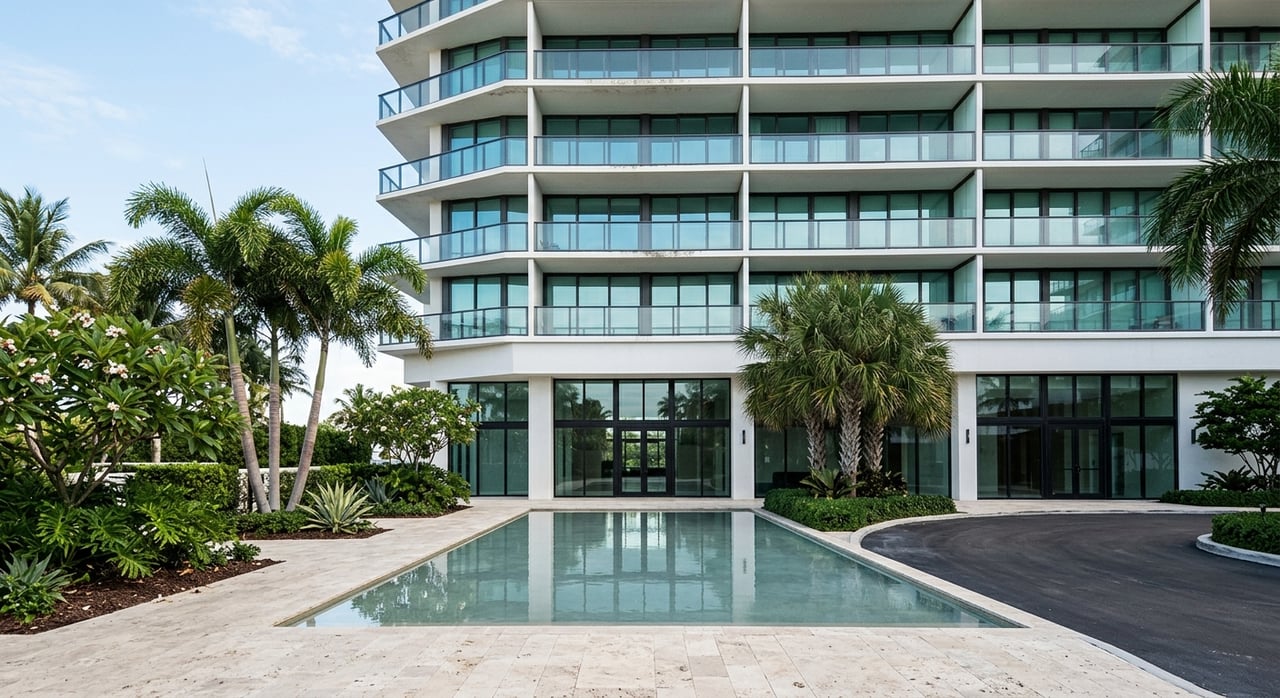
If you have been watching Fort Lauderdale luxury waterfront real estate, you may have noticed something that feels contradictory: some properties seem to linger, while others are hard to replace. That is because waterfront inventory here is not one market. It is a mix of distinct property types, seasonal demand shifts, and neighborhood-level differences that can change your strategy as a buyer or seller. Let’s dive in.
Why inventory patterns feel uneven
Fort Lauderdale luxury waterfront inventory is best understood in three overlapping groups: detached canal and Intracoastal homes, gated estate enclaves, and oceanfront condo corridors. Each group moves at its own pace, with different levels of supply and different buyer expectations.
In Q2 2025, Fort Lauderdale had 1,054 active single-family listings with 7.6 months of supply and 1,774 active condo listings with 11.7 months of supply. Within the waterfront segment, single-family supply stood at 7.0 months, while waterfront condos were at 11.7 months. That gap helps explain why the condo side often feels more negotiable than the detached waterfront side.
The luxury tier showed even more supply. Luxury single-family inventory reached 244 listings with 17.4 months of supply, while luxury condos reached 278 listings with 18.1 months of supply. In plain terms, buyers in the luxury segment usually have more time and more options than they would in a tighter market cycle.
Luxury pricing is market-relative
One important detail often gets missed: in Fort Lauderdale, the definition of luxury is not fixed. It shifts with the market.
In Q1 2025, the local entry point for luxury single-family homes was $3.625 million, while luxury condos started at $1.35 million. By Q2 2025, those thresholds had moved to $2.681 million for single-family homes and $1.45 million for condos. That means the word luxury reflects current local pricing patterns, not a permanent price band.
For you, this matters when comparing inventory trends over time. A headline about luxury supply may not be measuring the exact same price cutoff from one quarter to the next.
The biggest divide: homes versus condos
If you want the simplest read on Fort Lauderdale waterfront inventory, start here: detached waterfront homes and oceanfront condos do not behave the same way.
Detached canal homes and gated estates tend to have fewer comparable options and more property-specific value drivers. Things like lot size, water frontage, dockage, view lines, home condition, and privacy all matter. That usually creates a more bespoke market, even when overall supply rises.
Oceanfront condos, by contrast, often have deeper visible inventory. Buyers can compare building age, line orientation, amenities, monthly costs, renovation level, and time on market side by side. That creates more direct competition among sellers and often more room for negotiation.
Seasonal timing shapes visible supply
Inventory in Broward County followed a clear seasonal pattern in 2025. Single-family months of supply rose from 5.3 in January to 6.4 in June and July, then eased to 4.8 in December. Condo supply moved from 11.2 in January to 13.0 in May before dropping to 10.7 in December.
That pattern points to a practical takeaway: late spring and early summer usually bring the widest selection. If you are buying, that is often when more listings are visible. If you are selling, it is the season when your home may face the most competition.
Demand patterns support that same rhythm. Broward tourism and travel activity remain strong during the cooler season, and winter marketing efforts continue to target cold-weather markets. Fort Lauderdale-Hollywood International Airport handled more than 32 million passengers in 2025, including 6.3 million international passengers, which reinforces the area’s broad seasonal draw.
Winter brings buyers, not always bargains
Winter and early spring often bring more seasonal residents and second-home shoppers into the Fort Lauderdale market. That includes Canadian buyers, who remain a notable part of Florida’s international buyer mix. In Florida Realtors’ 2025 international buyer profile, 68% of the state’s international purchases were for vacation and or rental use, and 58% of Canadian buyers planned to use the property as a vacation home.
That seasonal demand does not automatically mean prices rise across every waterfront segment. It does mean the best-positioned properties can move faster when more second-home buyers are actively in town.
For buyers, the window from Thanksgiving to mid-January may offer opportunities, especially when a seller wants to move before peak season activity returns. For sellers, winter can bring stronger attention, but presentation, pricing, and property quality still carry the deal.
What current marketing times say
Longer marketing windows are one of the clearest signs of today’s luxury waterfront conditions. In Q2 2025, luxury single-family homes averaged 126 days on market and sold at an average 8.9% discount from the last list price. Luxury condos averaged 84 days on market with a 10.4% discount.
Those numbers suggest real negotiation room, especially when a property is dated, priced ahead of the market, or difficult to compare cleanly. They also remind sellers that patience alone is not a strategy. In a market with this much supply, pricing discipline matters.
Neighborhood patterns matter more than headlines
Broad city or county statistics are useful, but waterfront decisions in Fort Lauderdale often come down to submarket detail. Two neighborhoods can both be called luxury waterfront and still behave very differently.
Las Olas Isles inventory patterns
Las Olas Isles is one of the clearest examples of a detached waterfront submarket with high price points and lower turnover. In May 2026, public neighborhood data showed 41 homes for sale, a median listing price of $7.999 million, $1,508 per square foot, and 111 days on market.
That kind of market usually rewards buyers who understand replacement value and sellers who present a polished, well-priced product. Even when listings sit, not every home is truly interchangeable.
Harbor Beach inventory patterns
Harbor Beach offers another distinct pattern. In May 2026, the neighborhood showed 26 homes for sale, a median listing price of $14 million, and 88 days on market.
This is a small, high-ticket estate segment where lot quality, dockage, and overall presentation play a major role. Inventory can appear limited on paper, but negotiation power still depends on how a specific property compares with the few real alternatives available.
Galt Ocean Mile condo supply
The beach condo corridor around Galt Ocean Mile tells a different story. In Fort Lauderdale ZIP code 33308, Q4 2025 condo metrics showed 530 active listings, 10.0 months of supply, 136 new pending sales, and a 130-day median time to contract.
That is a much deeper supply profile than detached waterfront enclaves like Las Olas Isles or Harbor Beach. For buyers, that often means more choices and more leverage. For sellers, it means your condo must compete clearly on condition, pricing, and building-level factors.
What buyers should do with this data
If you are buying luxury waterfront property in Fort Lauderdale, timing and product type should guide your approach. Looking broadly at “the waterfront market” is usually too vague to be useful.
A smart buying strategy often looks like this:
- Focus first on property type: detached home, gated estate, or oceanfront condo
- Watch late spring and early summer for the widest visible selection
- Expect the most inventory depth in oceanfront condo corridors
- Move decisively on well-positioned detached waterfront homes during winter and early spring demand periods
- Use longer average days on market and discount trends to support careful negotiation
If you are an international or Canadian buyer, seasonality may matter even more because travel schedules often shape when you can tour and make decisions. In that case, planning ahead for winter inventory and spring selection can make your search more efficient.
What sellers should do with this data
If you are selling a Fort Lauderdale waterfront property, today’s inventory patterns call for precision. Buyers have options, and many are comparing listings carefully.
A strong seller strategy usually includes:
- Pricing to current competition, not to peak-market memory
- Accounting for your exact property type and submarket
- Highlighting condition, view, dockage, lot quality, and updates
- Preparing for negotiation, especially in the condo segment
- Launching with strong presentation when seasonal buyer traffic is highest
For estate sellers, the data shows that even high-end detached homes can take time. For condo sellers, deeper supply means sharper competition. In both cases, the homes that stand out tend to be the ones that align price, presentation, and market timing from day one.
The real takeaway on Fort Lauderdale waterfront inventory
The headline is not that Fort Lauderdale lacks inventory. It is that inventory behaves differently depending on what you are looking at. Detached canal and gated estate homes can still feel selective and specialized, while oceanfront condos often show much deeper supply.
The most inventory usually appears in late spring and early summer. The strongest seasonal demand often returns in winter and early spring. And across every segment, the best outcomes still come from understanding the details beneath the headline numbers.
If you are thinking about buying or selling in Fort Lauderdale’s luxury waterfront market, a neighborhood-level strategy matters. For tailored guidance on inventory, timing, and positioning, request a private consultation with Brady Thrasher.
FAQs
When is Fort Lauderdale luxury waterfront inventory usually highest?
- Inventory is typically deepest in late spring and early summer, when Broward County supply trends tend to peak for both single-family homes and condos.
Which Fort Lauderdale waterfront segment has the most supply?
- Oceanfront condos generally have the deepest supply, with waterfront and luxury condo inventory running well above detached waterfront home supply.
Which Fort Lauderdale waterfront areas feel tightest?
- Detached waterfront enclaves like Las Olas Isles and estate areas like Harbor Beach usually feel tighter because listing counts are lower and each property is more unique.
Are Fort Lauderdale luxury waterfront buyers able to negotiate?
- Yes. Q2 2025 data showed average discounts from last list price in both luxury single-family and luxury condo segments, which points to meaningful negotiation room in many cases.
Should Fort Lauderdale waterfront sellers wait for winter to list?
- Not always. Winter often brings strong seasonal demand, but pricing, condition, view, dockage, and presentation remain more important than season alone.
Why do Fort Lauderdale luxury waterfront listings sit longer than expected?
- Many waterfront properties are highly specific in layout, lot quality, building age, condition, or financing appeal, so buyers compare carefully and sellers often need to price with precision.