Drive south on Bayview toward Sunrise Boulevard and the Galleria still reads as a 1980s enclosed mall with Macy's and Dillard's anchoring the ends. Look at the federal filings, though, and the site is already something else. On May 13, 2026, the FAA cleared eight structures at 342 feet above ground level for the redevelopment site, a document that carries no construction authority but confirms the airspace math a nine-tower project needs before a shovel moves.
For a buyer weighing a Coral Ridge home against Rio Vista, Victoria Park, or a Galt Ocean condo, the tower count is the wrong headline. The mechanism that produced the tower count is the story.
The number that reframes the map
Coral Ridge is a low-rise enclave. The Galleria site is 31.5 acres. The proposed towers are approximately 30 stories. Under Fort Lauderdale's underlying zoning at 2414 E Sunrise Boulevard, none of those numbers should coexist. They coexist because the project is filed under Florida's Live Local Act, and the act lets the developer reach across the map for entitlements the parcel does not carry on its own.
Because this large-scale redevelopment is being pursued under Florida's Live Local Act, the partnership can match the maximum building height within one mile: in this case, 30 stories, drawn from nearby plots in Fort Lauderdale Beach. That is the sentence to sit with. The height on the Galleria site is not being negotiated with the neighborhood. It is being imported from a beachfront zoning district a mile away.
For a buyer, that changes what "surrounding character" means as a pricing input. The relevant comparable for what can be built next to a Coral Ridge lot is no longer the block behind it. It is the tallest thing standing within a mile.
What the joint venture actually filed
The specifics matter because the phasing determines which years of ownership carry construction risk and which years carry finished-project upside.
- Buyers: a joint venture led by Miami-based GFO Investments, founded by Russell Galbut, and Fort Lauderdale–based InSite Group, led by founder and CEO Ben Shmul, with Atlas Hill Real Estate and Prime Finance as partners.
- Price paid: Galbut and his partners InSite Group, Atlas Hill Real Estate and Prime Finance paid $73 million for the 800,000-square-foot mall last year, a steep discount from the $100 million-plus price Keystone-Florida sought when it listed the property.
- Program: Of the 3,144 proposed rental units, 1,273 would be designated workforce housing and 1,841 market rate. A 170-room hotel component sits on the west section of the site.
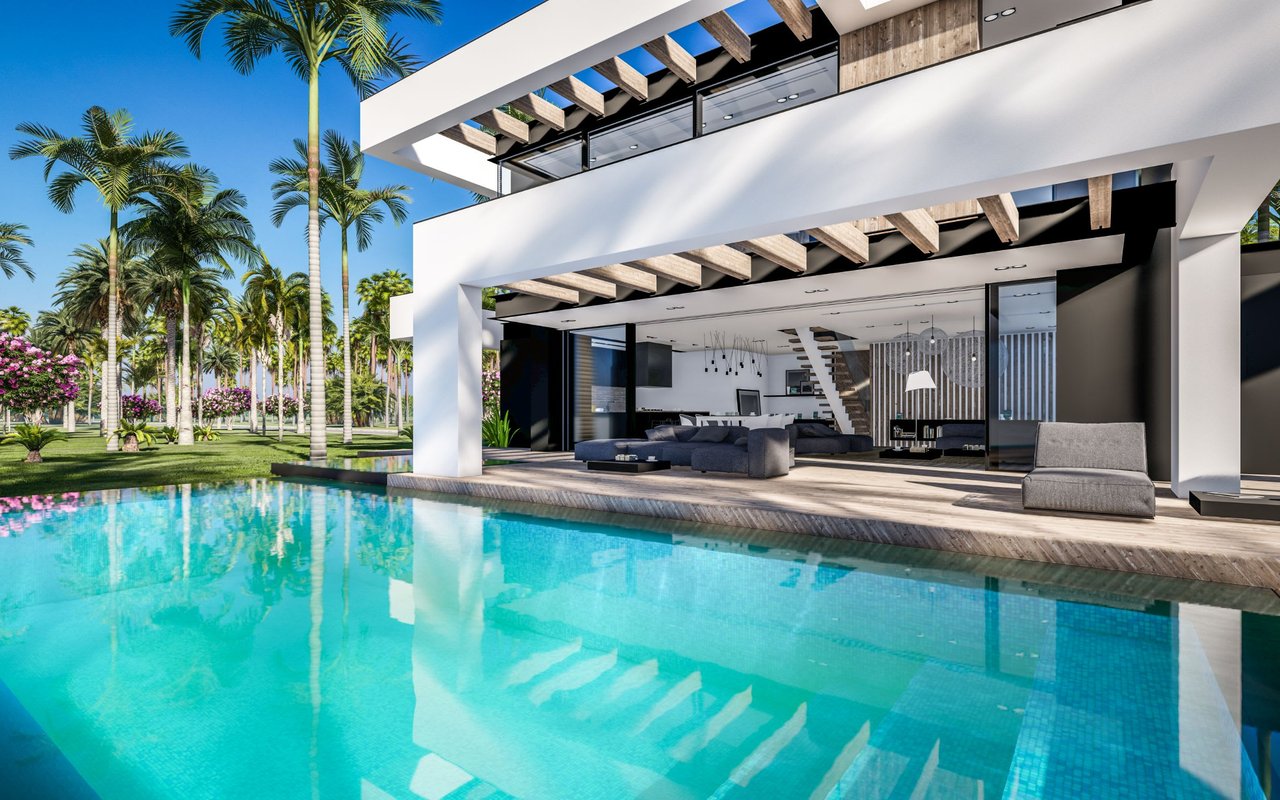
- East-section detail: The Galleria East redevelopment will include five 30-story towers, featuring 1,181 market-rate units and 800 workforce housing units. 675,968 SF of the existing mall space will be retained, while an additional 127,966 SF will be devoted to health and fitness uses, as well as retail and restaurants. Designed by Arquitectonica, the five towers will showcase modern, glass-heavy facades complemented by expansive balconies.
- Anchor tenant: Wayfair announced in April that it will open its first large-format Florida store at Galleria Fort Lauderdale as part of the center's comprehensive redevelopment. The location is scheduled to open in late 2027 and will span approximately 94,000 square feet across two levels.
- Federal clearance: The filings, issued on May 13, 2026 to FLL GALLERIA VENTURE, LLC and addressed to Ron Tencer of InSite Group, list eight structures labeled B1 through B8, each rising 342 feet above ground level, or approximately 350 feet above sea level.
A Coral Ridge buyer signing this year is buying into the phase where existing mall traffic, retained retail, and staged tower construction overlap. That is a different asset than the same address will be in 2029 or 2030.
The workforce-housing qualifier is a pricing input, not a policy debate
Live Local's affordability threshold is where most residents' anger and most buyers' math actually meet. To qualify, at least 40 percent of units must be rented to households earning at or below 120 percent of the area median income. According to the city, in 2025, that figure for a family of four in the mall's surrounding neighborhoods was $96,200. In practice, In Broward County, this can translate to rents of $2,421 for a studio apartment.
That rent number tells a buyer two things. First, "workforce" here is not what most Coral Ridge homeowners would picture when they hear the phrase. Second, the trade the state is offering the developer, in exchange for including those units, is what unlocks the height, density, and reduced parking on a parcel where none of it was permitted by right. The law also allows for increased density and reduced parking minimums, all aimed at encouraging walkable workforce housing.
Reduced parking is worth pausing on. Fewer required stalls per unit means more of the 31.5 acres goes vertical rather than to garage podium. It also means Sunrise Boulevard's curbside and side-street parking demand from the completed project is a question the site plan does not fully answer.
The Bayview companion filing
The Galleria is not the only proposal in this corridor. While Fort Lauderdale advances with the Galleria redevelopment, nearby properties are also attracting new proposals. Across the street at 1040 Bayview Drive, Sunrise & Bayview Partners LLC has proposed two multifamily buildings, rising 14 and 10 stories. There will be commercial and office space, as well as 180 units.
For a buyer looking at homes on the streets that feed Bayview between Sunrise Boulevard and the Coral Ridge Country Club perimeter, that second filing is the one to track. A 14-story building at 1040 Bayview does not replace the Galleria as the story. It confirms that the corridor is being repriced as a walk-to-density submarket, not as an interior single-family buffer.
Where the political read matters
Public opposition is not decoration in a Live Local project. It shapes revisions and phasing. The project has sparked fierce opposition since plans surfaced. More than 200 residents packed a city meeting last year to protest the redevelopment, and the online petition launched shortly afterward has continued to gain support. Fort Lauderdale Mayor Dean Trantalis pushed back on Galbut's remarks. "It's not the most diplomatic way to come into a new community and try to build a project such as this," Trantalis told Bisnow. "I would hope he would take that comment back. If he calls the opponents of his projects idiots, then he called me an idiot."
The relevant read for a buyer is not who is right. It is that the mayor is publicly at odds with the developer while the project moves through revisions, which raises the probability of design and phasing concessions and lowers the probability of a smooth, uninterrupted construction schedule. Both outcomes have price implications for nearby homes.
What a buyer should ask this quarter
The Galleria question is really five questions on one lot tour.
- Which streets does construction traffic use to reach 2414 E Sunrise, and does the home sit on one of them?
- What is the sightline from the primary living space and pool deck toward 342 feet of vertical mass to the southeast?
- Is the home inside the walk shed that benefits from a Wayfair anchor and 127,966 SF of new retail and fitness, or on the wrong side of Sunrise Boulevard for pedestrian use?
- How does the seller price the interim years, when Occupancy now hovers around 60 percent, and the mall has reportedly been losing money for years. Despite periodic upgrades, the once-thriving food court has dwindled. Large portions of the eastern end remain vacant., and how does that reconcile with the finished-project pricing story the listing agent is telling?
- If the 1040 Bayview filing advances, does the home's block absorb through-traffic from that project as well?
Those are questions a market with commodity portal data cannot answer for the buyer. They are answered on the ground, address by address.
FAQ
Is the Galleria approved to build today? No. The FAA determination clears airspace only. The FAA determinations do not authorize construction, though they represent a required step for structures of this scale located within federal aviation review corridors. The approvals establish that the proposed heights would not pose a hazard to air navigation under the submitted conditions and coordinates. City-level entitlement work is ongoing.
Why can the developer build 30 stories when the surrounding blocks are low-rise? Because the project is filed under the Live Local Act, and the developers plan to utilize Florida's recently passed Live Local Act, which allows projects that include workforce housing to skirt certain local zoning laws. The 30-story height is borrowed from a taller-zoned parcel within one mile.
When does the mall itself change? Wayfair is scheduled for late 2027, and existing anchors including Macy's and Dillard's continue to operate in the interim. The residential towers phase in behind that timeline.
Working with the corridor, not around it
Coral Ridge did not choose to sit across Sunrise Boulevard from one of the largest Live Local filings in Broward County. It does now. The homes that hold value best over the next five years will be the ones bought with the corridor priced in, not the ones bought as if the map had not changed.
If you are weighing a purchase on a street that feeds Bayview or East Sunrise, or preparing to list a home whose value story now has to account for the project across the boulevard, Brady Thrasher reads these filings for a living. Request a private consultation.