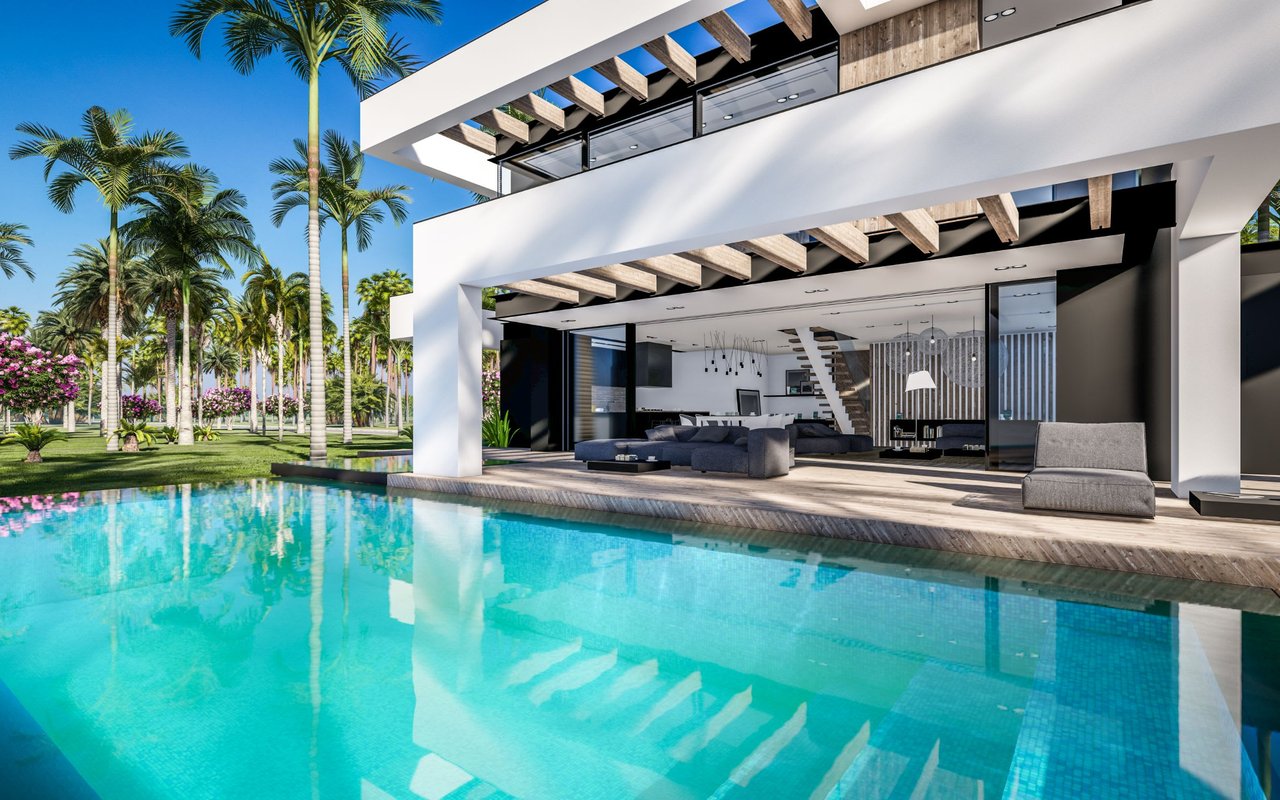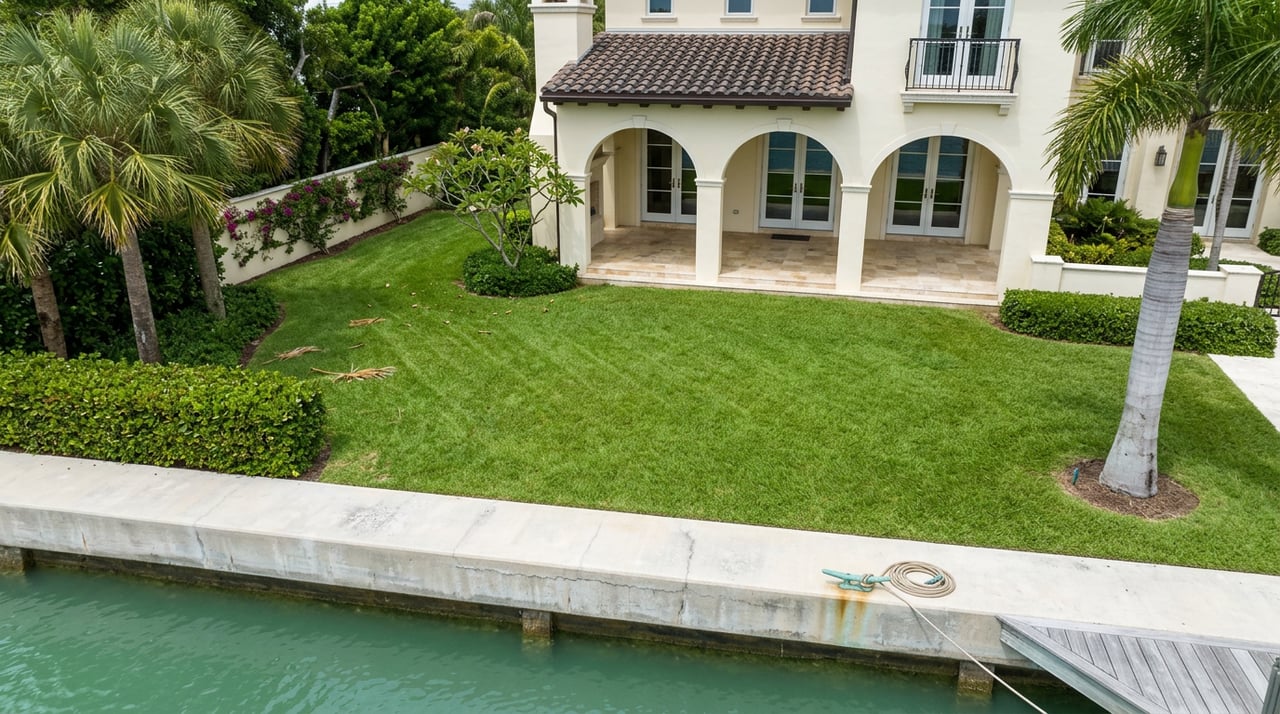
A buyer's agent recently toured two properties in one afternoon, both listed as Bay Colony, both advertised as boater's paradises with ocean access. By 4 p.m. the numbers made no sense. One property came with a deeded dock that could hold a 90-foot yacht and no monthly fee beyond upkeep. The other offered a slip capped at 50 feet, a board approval process, and a per-foot rental bill.
Same name. Same stretch of Fort Lauderdale. Two completely different products.
This is not a listing error. Bay Colony and Bay Colony Club sit next to each other along the Intracoastal in the northeast corner of the city, and the overlap in naming causes more confusion at the offer stage than most buyers expect. If you are shopping for deep-water access in this pocket of Fort Lauderdale, knowing which Bay Colony you are actually looking at is the difference between owning a seawall and renting a spot on someone else's.
The Same Name, Two Different Communities
Bay Colony is a guard-gated enclave of just over 100 single-family homes, sitting west of the Intracoastal Waterway and north of Commercial Boulevard. It is widely described as one of only two true 24-hour guard-gated single-family communities in Fort Lauderdale, a distinction that matters to buyers who want controlled access rather than a marketing label.
Bay Colony Club is something else entirely. It is a 33-acre garden-style condominium complex built in 1970, with more than 600 units, four pools, six tennis courts, three clubhouses, and its own boat dockage program. It sits northwest of the single-family enclave, close enough that the two names get used interchangeably in casual conversation, on listing sheets, and sometimes by agents who have not walked both properties.
The confusion is understandable. Both communities front the same waterway. Both promote ocean access with no fixed bridges. Both use the words "gated" and "waterfront" in their marketing. But the ownership structure underneath those words could not be more different.
What You Actually Own Behind the Guard Gate
The single-family side of Bay Colony puts the dock in your backyard, not on a shared association ledger. Homes here sit on wide, deep canals designed for large-vessel docking, with reported dock capacity up to 100 feet and no fixed bridges between the canal and open water. There is no per-foot rental fee because the water frontage is deeded to the lot.
That ownership comes at a price that reflects the asset, not just the address. Over the trailing twelve months as of July 2026, single-family sales in Bay Colony averaged an asking price near $4.7 million and a selling price near $3.86 million, working out to roughly $752 per square foot and a list-to-sell ratio of about 82 percent. Homes took an average of 247 days or more to sell, a pace that reflects how thin this market is rather than a lack of demand. When only about 100 homes exist and inventory turns over slowly, days on market stretch out even when a home is well priced.
That combination, real dock capacity plus real scarcity, is what a buyer is paying for here. It is not a marketing overlay. It is the mechanical reason a 90-foot dock in this enclave behaves nothing like a rented slip a half mile away.
The Other Bay Colony: A Slip You Rent, Not a Seawall You Own
Bay Colony Club runs on a different model. Boat dockage exists, but it is a shared amenity administered through the association, capped at boats up to roughly 50 feet, and priced by the foot. Multiple current listings put that rate between $1.50 and $3.00 per foot per month, which on a 40-foot boat lands somewhere between $60 and $120 a month, a fraction of what deeded frontage costs in the enclave next door, but also a fraction of the capacity.
The condo side comes with its own financial gate. Several current listings note a required credit score around 700 and, in at least one case, a 20 percent down payment as a condition of association approval, separate from any mortgage lender's requirements. Pets are not permitted community-wide, though leasing is allowed with no waiting period, a detail that matters if you plan to hold the unit as an investment rather than a primary residence.
Pricing here moves on a different rhythm than the enclave. As of mid-July 2026, the median sale price for Bay Colony Club condos was about $275,000, with homes averaging around 166 days on market, a pace that looks nothing like the single-family side's 247-day average once you account for the difference in price point and buyer pool.
A Side-by-Side Look
| Bay Colony (single-family enclave) | Bay Colony Club (condominium) | |
|---|---|---|
| Built | Development began late 1960s | Built 1970 |
| Size | Just over 100 homes | 33 acres, 600+ units |
| Dock capacity | Up to 100 feet, deeded to the lot | Up to 50 feet, association-administered |
| Dock cost | No per-foot fee, private frontage | Roughly $1.50 to $3.00 per foot, per month |
| Bridges | No fixed bridges to open water | No fixed bridges to open water |
| Security | 24-hour guard gate | Gated, with community-wide security |
| Recent price data | Averaged about $3.86M selling price, trailing 12 months as of July 2026 | About $275K median sale price, as of mid-July 2026 |
| Typical days on market | About 247 days | About 166 days |
Why the Mix-Up Costs Buyers Real Money
The risk is not that a buyer ends up in the wrong neighborhood. Both are legitimate, well-run communities with genuine water access. The risk is that a boat owner prices their decision around the wrong product.
A buyer who assumes the enclave's 100-foot, no-fee dock economics apply to a condo purchase will be surprised by board approval requirements and a monthly bill that scales with vessel length. A buyer who assumes the condo's lower entry price and per-foot rental model apply to the single-family enclave will misjudge what that acreage actually costs, since the water frontage there is priced into the land, not billed separately.
The fix is simple due diligence, done before an offer rather than after inspection. Ask whether the dock is deeded to the property or administered as a shared association amenity. Confirm the maximum permitted length against your vessel's actual length overall and beam, not just the number in the listing remarks. Verify bridge clearance and no-fixed-bridge status directly rather than assuming it carries over from a neighboring community with a similar name. If the property sits within an association, ask for the reserve study and any buyer financial qualification requirements in writing.
For a boat owner treating dockage as a primary decision factor rather than a nice-to-have, that ten-minute conversation with a listing agent settles more than an hour of comparing photos.
Frequently Asked Questions
Is Bay Colony Club part of Bay Colony? No. They are adjacent but separate communities with their own governance, security, and dock policies. The proximity and similar naming are the source of most confusion, not a shared ownership structure.
Can I dock a boat over 50 feet in Bay Colony? Only in the single-family enclave, where reported dock capacity runs up to 100 feet on deeded, privately held canal frontage. The condominium side caps dockage at roughly 50 feet through its association program.
What is the fastest way to confirm which product I am looking at before I write an offer? Ask for the specific dock documentation, whether that is a deed reference for the single-family enclave or the association's dockage agreement and current per-foot rate for the condominium. Do not rely on the word "Bay Colony" alone to tell you which one you are buying into.
Buying deep-water access in Fort Lauderdale means understanding what is actually deeded to a property versus what is administered through an association, and that distinction is easy to miss when two communities share a name and a shoreline. Brady Thrasher works with boat owners and cross-border buyers who need that distinction confirmed before they make an offer, not after closing. Request a private consultation to walk through the dock rights, bridge clearances, and association terms on any Bay Colony property you are considering.